
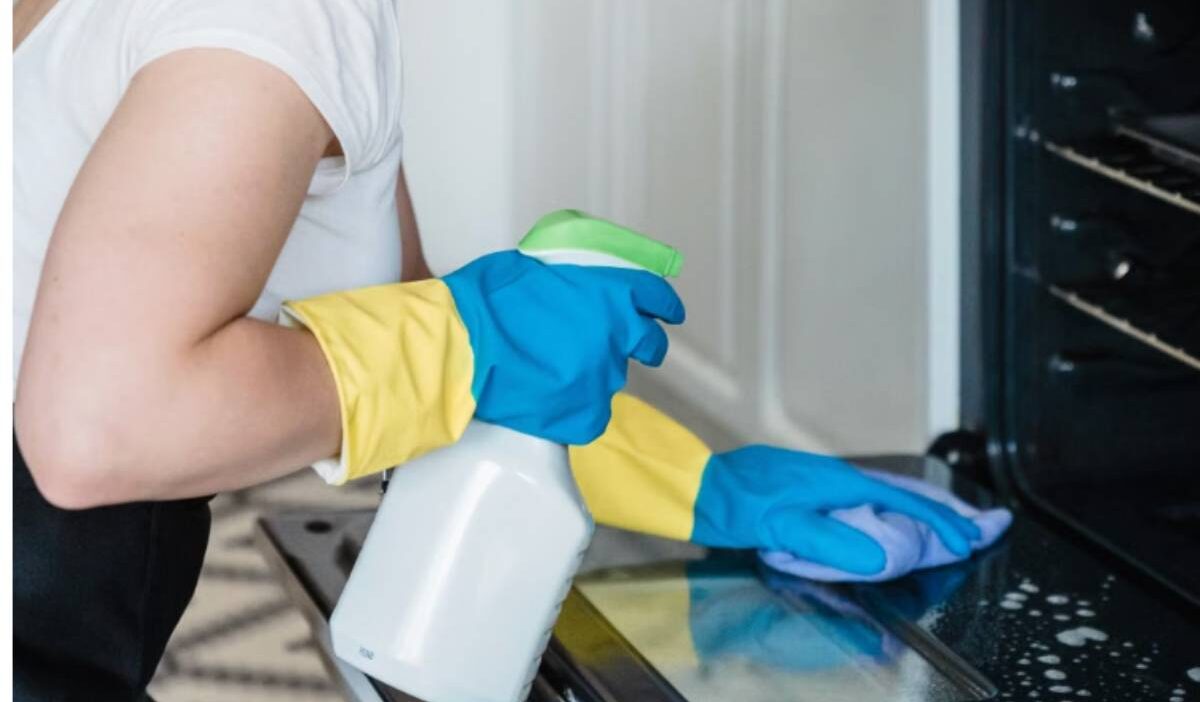
An oven rarely gets dirty all at once. A splash of sauce here, a little grease there, and eventually the inside is covered with residue that smokes, smells, and becomes harder to remove each time you cook.
How to clean an oven effectively depends on dealing with that buildup without scratching surfaces or using the wrong method for your oven type. A good clean can get the interior back in shape before those everyday spills become a much tougher job.
1. What You’ll Need Before You Start
A good oven clean is easier when the right tools are within reach before you begin. The exact products you need depend on how much buildup you are dealing with, but the following covers most routine and deeper cleaning jobs.
| What You’ll Need | What It’s For |
| Baking soda | Loosening grease and baked-on residue |
| White vinegar | Helping lift remaining baking soda residue during cleanup |
| Dish soap | Cutting through fresh or moderate grease |
| Microfiber cloth or sponge | Wiping interior surfaces and the oven door |
| Non-abrasive scrub pad | Working on stubborn residue without aggressive scraping |
| Plastic scraper | Lifting softened, stuck-on food |
| Rubber gloves | Protecting your hands while cleaning |
| Commercial oven cleaner (optional) | Tackling heavy buildup when approved for your oven |
2. How to Clean an Oven: Step-by-Step Guide
The key to clean an oven quickly is removing loose debris first and giving the cleaner enough time to soften baked-on grease. Before you begin, turn off the oven and let it cool completely.
Step 1: Remove the Oven Racks
Take the racks out so you can easily reach the oven walls, floor, corners, and other dirty areas.
Clean the racks separately according to the manufacturer’s instructions, as their finish may require different care from the oven interior.
Step 2: Remove Loose Food and Debris
Use a dry cloth, soft brush, or plastic scraper to remove crumbs, loose grease, and burnt food from the bottom of the oven.
Doing this before adding cleaner prevents loose debris from turning into a wet mess and makes the remaining buildup easier to see.
Step 3: Apply Your Cleaning Solution
Apply an oven-safe cleaner according to the product label. If you’re also learning how to clean an oven door, use only products and methods approved for the door’s glass and surrounding surfaces. For compatible areas, a baking soda paste made with baking soda and a small amount of water can also be used.
Focus on greasy or burnt spots while avoiding heating elements, fans, vents, sensors, and any surfaces your manufacturer says should remain cleaner-free.
Step 4: Let It Sit
Allow the cleaning solution enough time to soften baked-on grease and food residue.
The required contact time varies by product, so follow the cleaner’s instructions rather than assuming that leaving it on longer will work better.
Step 5: Scrub Away Grease and Burnt Residue
Use a non-abrasive scrub pad or plastic scraper to loosen softened buildup.
Spend extra time on stubborn areas, but avoid steel wool, metal scrapers, or other abrasive tools unless they are specifically approved for your oven.
Step 6: Wipe the Oven Clean
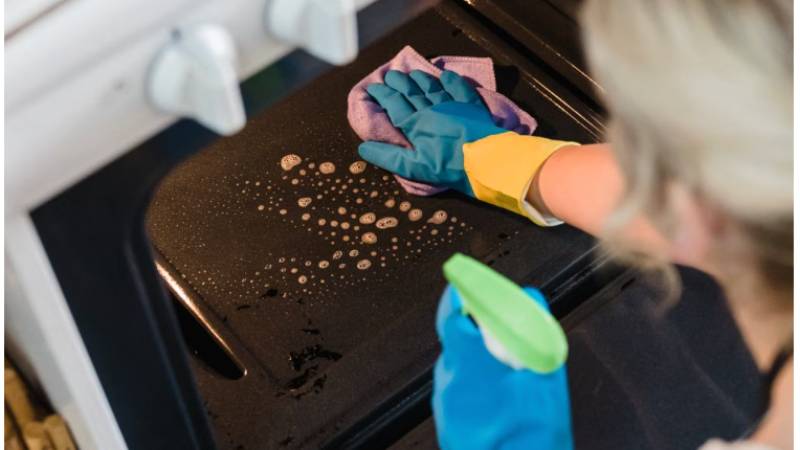
Use a damp microfiber cloth or sponge to remove loosened grime and cleaning residue.
Rinse the cloth frequently and continue wiping until the oven surfaces feel clean and no visible cleaner remains.
Step 7: Let the Oven Dry Completely
The final step in how to clean an oven is letting the interior dry completely. Leave the oven door open and allow it to air-dry.
Once everything is clean and dry, reinstall the racks. Make sure no cleaning product remains inside before cooking food again.
>>> Read more: How to Patch a Hole in the Wall: A Step-by-Step Guide for Any Size Repair
3. How to Remove Tough Oven Stains
Some oven stains need extra treatment because repeated heat has baked grease and food onto the surface. Instead of scrubbing harder, soften the buildup first and work on one area at a time.
- Burnt-On Grease
Apply an oven-safe cleaner to greasy spots and let it sit for the recommended time. Use a non-abrasive pad to loosen the residue, then wipe it away. Repeat if necessary.
- Burnt Food on the Oven Bottom
Remove loose pieces with a plastic scraper, then soften stubborn residue with an approved cleaner. Avoid sharp metal tools and be careful around heating elements and openings.
- Stubborn Carbon Buildup
When learning how to clean an oven, stubborn carbon deposits may require several cleaning passes. Treat small areas, allow the cleaner to work, and remove each softened layer before repeating.
For heavy buildup, check whether your oven has a manufacturer-approved self-clean or steam-clean function before using stronger cleaning methods.
4. How to Clean Different Types of Ovens
Not every oven should be cleaned the same way. Self-cleaning, steam-cleaning, and conventional ovens each require a slightly different approach, so always check the manufacturer’s instructions first.
Self-Cleaning Oven
A self-cleaning oven uses very high temperatures to turn baked-on residue into ash. Remove large food debris and any racks or accessories the manual says should come out before starting the cycle.
Keep the area ventilated, do not force the locked door open, and wait until the oven has cooled completely before wiping away the ash.
Steam-Clean Oven
Steam-clean cycles use water and lower heat to soften light grease and fresh spills. Add water only where and in the amount specified by the manufacturer.
Once the cycle ends and the oven cools, wipe away the loosened residue. Steam cleaning is generally more effective for light buildup than heavily carbonized grease.
Conventional Oven
A conventional oven usually requires manual cleaning. Remove loose debris, apply an oven-safe cleaner, let it soften the buildup, then wipe the interior thoroughly.
For compatible surfaces, baking soda and water can also be useful when learning how to clean an oven without oven cleaner.
5. How to Keep Your Oven Clean Longer
Regular maintenance can prevent grease and burnt food from building up, making deep cleaning much easier. A few simple habits can help keep your oven cleaner between full cleanings.
- Wipe up spills promptly: Once the oven has cooled completely, clean fresh spills before repeated heating bakes them onto the surface.
- Use a baking tray for drips: Place food that may bubble or overflow on a suitable baking tray to catch spills before they reach the oven floor.
- Clean every 3 to 6 months: A routine deep clean every few months can prevent stubborn grease and carbon buildup. Clean more often if you use the oven frequently.
- Do not let grease accumulate: Check the oven regularly and remove visible splatters or residue before they become harder to clean.
Small, regular cleanups can reduce the amount of scrubbing needed during your next deep clean.
>>> Also check more: How to Boil an Egg Perfectly Every Time: Soft, Medium, & Hard-Boiled
6. FAQs
What Is the Best Way to Clean the Inside of Your Oven?
Remove loose debris first, soften the remaining buildup with an oven-safe cleaner, then scrub gently and wipe away all residue. Always follow the cleaning instructions for your particular oven.
What Is the Fastest Way to Clean a Very Dirty Oven?
Use the oven’s approved self-cleaning function when appropriate, or choose a compatible cleaner designed for heavy buildup. Allowing the cleaner sufficient contact time can reduce the amount of scrubbing required.
How Do I Get Burnt Stuff Off the Bottom of My Oven?
Let the oven cool, remove loose pieces, then soften stuck-on residue with an approved cleaner before lifting it with a non-abrasive pad or plastic scraper. Avoid sharp metal tools that could damage the finish.
Do Baking Soda and Vinegar Really Clean Ovens?
Baking soda can help loosen some grease and food residue, while vinegar can help remove remaining baking soda during cleanup. They may work for moderate buildup but are not necessarily sufficient for heavily carbonized deposits.
7. Conclusion
The longer spills and grease repeatedly heat inside an oven, the more stubborn the cleanup tends to become.
A better approach to how to clean an oven is to deal with fresh messes early, match the cleaning method to your appliance, and reserve deeper cleaning for residue that routine maintenance cannot remove. Always let your oven’s care instructions determine which products and cleaning cycles are safe to use.