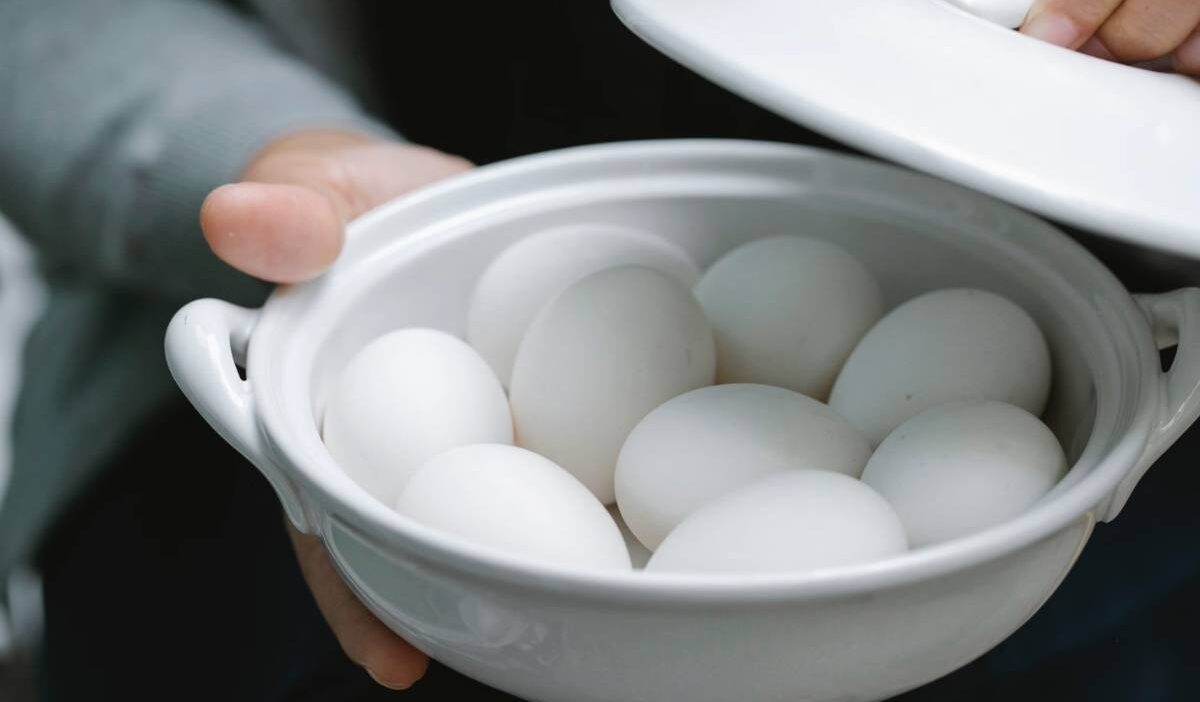
A few minutes can completely change a boiled egg. Take it out too soon and the white may still be loose. Leave it too long, and the yolk can become dry and chalky.
Getting how to boil an egg right is mostly a matter of timing, with a few small details making the difference between runny, jammy, and fully set yolks.
1. What You’ll Need
You only need a few kitchen basics when it comes to how to boil an egg properly:
- Eggs: Use as many as can fit comfortably in a single layer.
- Saucepan: Choose one large enough to avoid crowding.
- Water: Use enough to fully cover the eggs.
- Slotted spoon or tongs: For safely adding and removing the eggs.
- Bowl of ice water: Prepare it in advance to stop the cooking quickly.
Once everything is ready, the key factors are water temperature and cooking time.
2. How to Boil an Egg
Boiling eggs is simple, but consistency depends on controlling when the eggs enter the water and how long they cook. Starting with already-boiling water also makes it easier to use cooking time as your guide to doneness.
Step 1: Bring the Water to a Boil
Fill a saucepan with enough water to cover the eggs by about an inch. Bring the water to a full boil over medium-high to high heat.
Once boiling, reduce the heat slightly if necessary to maintain a steady boil without excessive bubbling.
Step 2: Carefully Add the Eggs
Lower the eggs into the boiling water one at a time using a slotted spoon. Avoid dropping them directly into the pot, as hitting the bottom can crack the shells.
Once all the eggs are submerged, start your timer.
Step 3: Boil for Your Preferred Doneness
how long does it take to boil an egg determines the texture of both the yolk and white. As a general starting point:
- 6 minutes: runny yolk
- 7 minutes: soft, jammy center
- 8–9 minutes: firmer, partially set yolk
- 10–12 minutes: fully set hard-boiled egg
Egg size, starting temperature, altitude, and how vigorously the water boils can shift these times slightly, so you may need to adjust after your first batch.
Step 4: Transfer Eggs to an Ice Bath
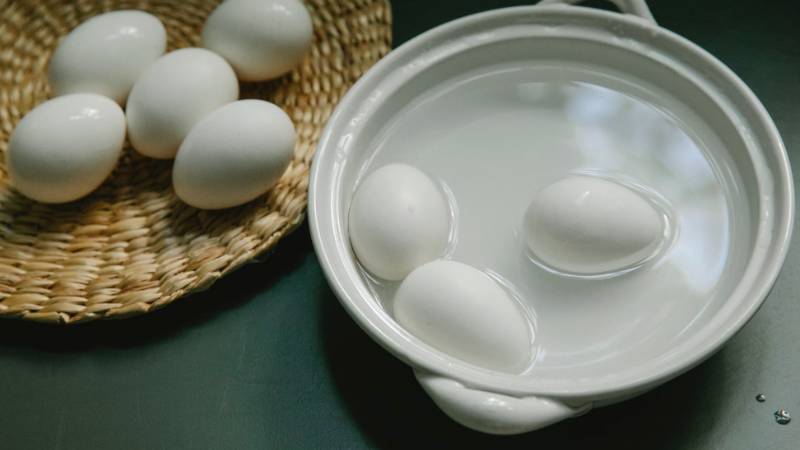
When the timer ends, immediately move the eggs to ice water for about 5 minutes. This stops the cooking process and helps control the final yolk texture.
It is a small but important part of how to boil an egg when you want more control over the final doneness.
Step 5: Peel and Serve
Tap the cooled egg gently, roll it to crack the shell, and peel from the wider end. Running the egg under cool water can help remove stubborn shell pieces.
Serve immediately, or refrigerate the eggs promptly if you are saving them for later
>>> Read more: How to Remove Peanut Butter Stains From Clothes, Carpet, and Upholstery
3. How Long Should You Boil Eggs?
Timing is where how to soft boil an egg changes from one preference to another. A difference of only a minute or two can take the yolk from flowing to jammy and eventually fully set.
| Doneness | Approx. Boiling Time | Yolk Texture | White Texture |
| Soft-boiled | 6 minutes | Runny | Set |
| Jammy | 7 minutes | Thick and creamy | Set |
| Medium-boiled | 8–9 minutes | Mostly set with a softer center | Firm |
| Hard-boiled | 10–12 minutes | Fully set | Firm |
4. Tips for Easy-to-Peel Hard-Boiled Eggs
Even perfectly cooked eggs can become frustrating when half the white comes away with the shell.
A few adjustments can make peeling easier:
- Use eggs that aren’t extremely fresh. Slightly older refrigerated eggs generally peel more easily than very fresh ones.
- Start in boiling water. Adding eggs to already-boiling water can make peeling easier compared with some cold-start methods.
- Cool them promptly. Move cooked eggs into an ice bath instead of allowing them to cool slowly in the hot water.
- Crack the shell all over. Creating many small cracks gives you more places to get underneath the membrane.
- Begin at the wider end. The air pocket there often provides an easier starting point.
- Try peeling under running water. Water can work its way between the membrane and egg and help release stubborn shell fragments.
5. Common Egg Boiling Mistakes to Avoid
Even if you know how to boil an egg, a few common mistakes can affect texture, peeling, or cracking.
- Overcooking the Eggs: Cooking eggs too long can make the whites rubbery and the yolks dry. Use a timer instead of estimating.
- Skipping the Ice Bath: Eggs continue cooking after they leave the pot. Transfer them to ice water right away to stop carryover cooking.
- Adding Cold Eggs Too Roughly: Cold eggs can be boiled successfully, but dropping them into boiling water may cause cracks. Lower them gently with a spoon.
- Crowding the Pot: Keep eggs in a single layer so they have enough space and are easier to handle.
Controlling the timing, heat, and cooling process helps prevent most egg-boiling problems.
6. How Long Do Boiled Eggs Last?
After learning how to boil an egg, it is also important to know how long cooked eggs stay safe to eat. Proper refrigeration helps preserve quality and reduce the risk of spoilage.
According to the USDA, hard-cooked eggs can be refrigerated for up to 1 week after cooking.
In the Refrigerator
Refrigerate boiled eggs within 2 hours of cooking and keep the refrigerator at 40°F (4°C) or below. Dating the container can help you track storage time.
Peeled vs. Unpeeled Eggs
Unpeeled eggs are better protected from drying out and absorbing odors. Store peeled eggs in a covered container in the refrigerator.
Signs Boiled Eggs Have Gone Bad
Discard boiled eggs if they develop:
- An unusual or unpleasant odor
- A slimy texture
- Visible mold
- Other obvious signs of spoilage
A green or gray ring around the yolk can result from overcooking and does not necessarily mean the egg has spoiled.
>>> You might be interested in: How Many Oz in a Cup? Easy Conversion Charts for Cooking and Baking
7. FAQs
Do You Put Eggs in Water Before or After It’s Boiling?
Both methods exist, but this method adds eggs after the water reaches a boil. It gives you a clear starting point for timing different yolk consistencies.
What Is the Best Way to Boil Your Eggs?
Use boiling water, lower the eggs in gently, time them according to your preferred doneness, and transfer them directly to an ice bath afterward.
What Is the 5 5 5 Rule for Boiling Eggs?
The 5-5-5 method usually refers to cooking eggs in an Instant Pot: about 5 minutes under pressure, 5 minutes of natural pressure release, and 5 minutes in an ice bath. It is not a standard stovetop boiling method.
8. Conclusion
From a runny breakfast egg to a fully set yolk for meal prep, a difference of just a few minutes creates a noticeably different result.
Once you’ve learned how to boil an egg, use the timing that matches the texture you actually enjoy and keep the ice bath ready before you start. With that routine in place, there is much less guesswork from one batch to the next.