

You’re ready for a new phone, but one decision comes before comparing cameras or battery life: should you buy it through a carrier or on its own? As more brands sell phones directly to consumers, many shoppers are discovering they have far more flexibility than they did just a few years ago.
This guide rounds up the best SIM free smartphone options, helping you compare the top choices and understand what to look for before making your decision.
1. What Is a SIM Free Smartphone?

A SIM free smartphone is sold on its own, without a mobile plan included. Once you have the device, you’re free to activate service with the network provider of your choice whenever you’re ready.
Now, you may get SIM free versions of smartphones from brands like Apple and Samsung to Google,. This gives consumers more options than ever before, but it also means looking beyond the price.
Network compatibility, software support, and long-term value can all influence which model is the better fit.
2. SIM Free Smartphone vs Carrier Locked Phone
The hardware is often identical. The real difference lies in how the phone is activated and how much control you have over your mobile service after you start using it.
| Feature | SIM Free Smartphone | Carrier-Locked Phone |
| Sold with a mobile plan | No | Usually yes |
| Network options | Works with different providers once activated (if compatible) | Restricted to one provider until unlocked |
| Switching providers | Generally simple | May require meeting unlocking requirements |
| Upfront cost | Higher | Often lower through monthly financing |
| Best suited for | People who want full control over their mobile service | People who prefer spreading the cost of the phone over time |
For people who like comparing plans or changing providers whenever better deals become available, a SIM free smartphone offers considerably more freedom.
A carrier-locked phone may still make sense if lower upfront costs are your highest priority and you don’t expect to change networks anytime soon.
3. The Best SIM Free Smartphones in 2026
The best SIM free smartphone isn’t always the newest or most expensive model.
For some people, dependable performance is the priority. Others care more about battery life, 5G connectivity, or getting the best value for their budget.
The recommendations below focus on smartphones that continue to deliver a solid everyday experience and are available through AirTalk Wireless, although device availability may vary by state and inventory.
Best Premium Smartphones
If you want flagship-level performance without paying flagship prices, these models offer the strongest overall experience.
| Smartphone | Why We Like It |
| Samsung Galaxy S22 5G | Excellent cameras, powerful Snapdragon processor, bright AMOLED display, and years of software support. |
| Samsung Galaxy S21 5G | Still one of the best values for everyday performance, gaming, and photography. |
| Samsung Galaxy S20 5G | A premium option with a high-quality display and dependable performance. |
These phones are ideal for users who multitask, stream frequently, or simply want a device that can stay fast for years.
Best Value for Money
These smartphones strike a balance between affordability and everyday usability.
| Smartphone | Best For |
| Apple iPhone 11 | Reliable performance, excellent cameras, and long-lasting iOS support. |
| Samsung Galaxy A71 5G | Large display, solid battery life, and dependable 5G connectivity. |
| Apple iPhone XS | A premium iPhone experience at a much lower price than newer models. |
If you’re looking for the biggest return on your money, this is where most buyers should start.
Best Budget Smartphones
A lower price doesn’t mean you have to settle for a poor experience. These devices handle everyday tasks like calling, messaging, social media, video streaming, and web browsing comfortably.
| Smartphone | Best For |
| Samsung Galaxy A12 | Excellent battery life and dependable everyday performance. |
| TCL A30 | A simple Android phone for daily communication. |
| FOXXD A67L Gen2 | One of the most affordable modern Android smartphones available. |
| FOXXD A67U | A good entry-level option for light daily use. |
They’re ideal for students, seniors, first-time smartphone owners, or anyone who mainly uses their phone for everyday essentials.
Best iPhones
Buying an older iPhone SIM free remains one of the easiest ways to enjoy iOS without paying flagship prices.
| iPhone | Why It’s Worth Considering |
| iPhone 11 | The best overall balance of performance, battery life, and camera quality. |
| iPhone XS | Premium OLED display and smooth performance at a lower cost. |
| iPhone 8 | A dependable option for users with basic smartphone needs. |
| iPhone 7 Plus | Large display and reliable everyday performance for budget buyers. |
These models continue to receive strong app support and remain popular among users who prefer Apple’s ecosystem.
Best for Battery Life
If you spend long hours away from a charger, battery life should be one of your top priorities.
- Samsung Galaxy A71 5G: Large battery paired with efficient hardware for dependable all-day use.
- Samsung Galaxy A12: One of the strongest battery performers in the budget category.
- TCL 20 SE: Built around a large battery that’s well suited to everyday browsing, streaming, and messaging.
For travelers, delivery drivers, field workers, and anyone who relies on their phone throughout the day, these models can help reduce the need for frequent charging.
4. What to Consider Before Buying a SIM Free Smartphone
A SIM free smartphone gives you more control over your wireless service, but not every model is the right fit for every user.
Before placing your order, take a few minutes to check the details that can affect compatibility, performance, and long-term value.
Network Compatibility
Not all versions of the same smartphone are built for the same market. A model sold in another country may look identical but support a different set of LTE or 5G bands.
Before ordering, check that the exact model is compatible with your wireless provider. Spending a minute on this step can help you avoid weak signal coverage or activation issues after the phone arrives.
Physical SIM or eSIM Support
The way smartphones connect to mobile service has changed significantly over the past few years.
While many devices still include a nano SIM tray, newer models increasingly support eSIM, and some no longer accept a physical SIM card at all.
If you frequently travel, use two phone numbers, or want faster activation, a device with eSIM capabilities can make everyday use much more convenient.
Storage and Performance
It’s easy to focus on the purchase price, but your storage needs can change quickly.
Think about how you use your phone. Casual users may be comfortable with 128 GB, while people who record lots of videos, download games, or work on the go may benefit from 256 GB or more.
Likewise, a newer processor and additional RAM can help your phone stay responsive for several years.
Warranty and Software Updates
A lower price doesn’t always translate into better long-term value.
Check whether the manufacturer provides warranty coverage in your country and how many years of operating system and security updates are included.
Longer software support means better security, access to new features, and a device that remains useful for much longer.
5. Choosing the Right SIM Card for Your New Phone
Your new smartphone is ready to go. The next step is connecting it to a wireless network in a way that fits how you use your phone every day.
Check Whether Your Phone Uses a Physical SIM or eSIM
Most modern smartphones support a nano SIM, an eSIM, or both. Before activating service, confirm which option your device uses.
If your phone is eSIM-ready, activation can often be completed online in minutes, eliminating the need to wait for a physical SIM card.
Not sure if your device supports eSIM? AirTalk Wireless offers a Free eSIM Compatibility Checker that lets you verify your phone before activation.
Match Your Wireless Plan to Your Daily Usage
The best mobile plan isn’t necessarily the one with the most data. It’s the one that matches your routine.
If you mostly call and text, a basic plan may be all you need. People who stream music, browse social media, or use navigation apps regularly should look for larger data allowances, while heavy users may benefit from unlimited data or generous hotspot access.
Choosing a plan based on actual usage helps you avoid paying for features you’ll rarely use.
Don’t Overlook Network Coverage
Price is important, but reliable coverage matters even more.
Before activating a new line, check how well a carrier performs where you spend most of your time, including your home, workplace, and frequently visited locations. A slightly higher monthly bill may be worthwhile if it provides more dependable service.
Keep the Phone You Already Own
One of the biggest advantages of a SIM free smartphone is that you don’t have to replace it when changing wireless providers.
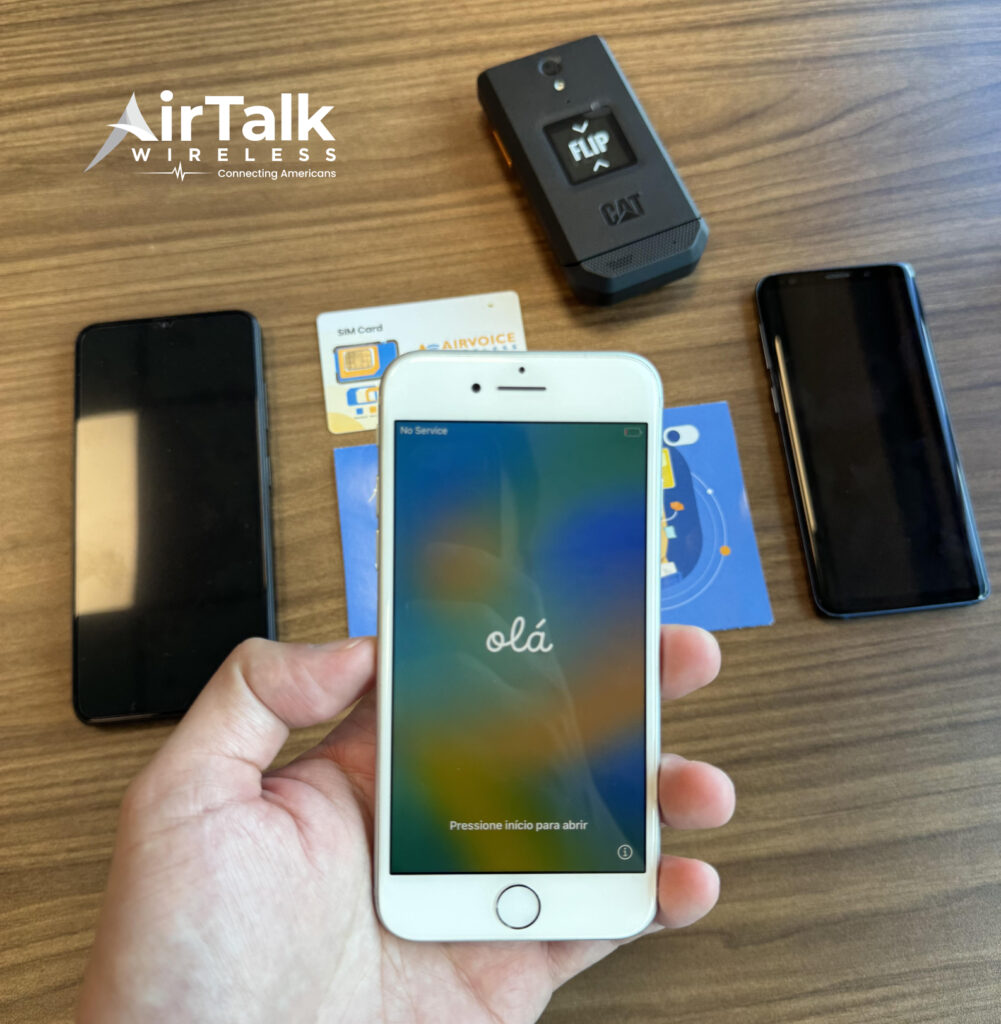
If you’re in the United States, AirTalk Wireless allows eligible households to bring a compatible device through its Bring Your Own Device (BYOD) program.
Supported phones can be activated with either a physical SIM card or an eSIM, giving you access to free or low-cost monthly wireless service through the federal Lifeline program while continuing to use the smartphone you already own.
Read more: Are SIM Cards Universal? Here’s Why Some Work and Others Don’t
6. FAQs
Are SIM-free phones any good?
A SIM free smartphone offers the same hardware and features as the carrier version. The main difference is that you choose your own wireless provider instead of purchasing the phone with a bundled provider plan.
What are the disadvantages of a SIM-free phone?
The biggest drawback is the higher upfront cost since you’re purchasing the device outright. You’ll also need to choose and activate your own wireless plan, although many buyers see this as an advantage because it offers greater flexibility.
Can I just take my SIM card out and put it in a different phone?
In many cases, yes. Simply moving your SIM card is enough to keep your existing number and service. The new device must be compatible with your mobile provider, and both devices need to use the same SIM type or support eSIM. Depending on your provider, you may also be asked to activate the new device before it can connect to the network.
7. Conclusion
A SIM free smartphone gives you more control over your mobile experience, from the device you use to the carrier you connect with.
Rather than focusing on the latest release, look for a phone that delivers the performance, battery life, and long-term support you need. Combined with a wireless plan that matches your lifestyle, the right smartphone can continue serving you well for years to come.