A free government cellular phones offer can help eligible users stay connected without monthly bills, but understanding how these programs work is essential before applying. Many offers are tied to specific eligibility rules and provider options.
In this guide, you will learn who qualifies, how the application process works, and what to expect when applying for a free phone and service.
1. Free Government Cellular Phones: Are They Really Free?
Free government cellular phones are real, but the offers work within the structure of the Lifeline program, not as a simple giveaway.
Lifeline is a federal assistance program that helps eligible users access phone service at no cost, and providers may include a device as part of that service.
What “free” actually means under Lifeline:
- No monthly cost for basic talk, text, and a set amount of data
- A smartphone included by the provider, depending on current inventory
- No credit check or long-term contract required
What it does not always include:
- Guaranteed access to the latest iPhone or high-end models
- High-speed data in most plans
- Premium features unless you choose a paid upgrade
In practice:
- Older smartphones are more likely to be offered at $0
- Newer devices may appear as discounted upgrade options
- Availability depends on the provider and your location
So yes, free government cellular phones are genuinely free through Lifeline if you qualify, but the exact phone and plan details depend on what providers currently offer.
2. Who Qualifies for Free Government Cellular Phones
To receive free government phones, you must meet Lifeline eligibility requirements. Approval is based on financial need rather than credit score or employment status.
There are two main ways to qualify:
Program-Based Eligibility
This is the fastest and most common path.
You may qualify if you participate in programs such as:
- SNAP (Food Stamps)
- Medicaid
- Supplemental Security Income (SSI)
- Federal Public Housing Assistance (FPHA)
- Veterans Pension or Survivors Benefits
Applicants in these programs often benefit from:
- Faster approval
- Automatic verification
- Fewer documents required
This path gives you the highest chance of quick approval.
Income-Based Eligibility
If you are not enrolled in a qualifying program, you can still apply based on your income.
To qualify:
- Your household income must typically be at or below 135% of the Federal Poverty Guidelines
- The exact limit depends on your household size
You may need to provide:
- Pay stubs
- Tax returns
- Income statements
While this path may take slightly longer due to manual verification, approved applicants receive the same benefits, including access to free government cellular phones offers.
3. How to Apply for Free Government Cellular Phones (Step-by-Step)
Applying for Lifeline-backed cellular phones is a straightforward process, but each step affects how quickly you get approved and what device you can access.
Following the correct order helps avoid delays and improves your chances of getting a better phone.
Check Your Eligibility
Start by confirming that you qualify through Lifeline.
You may be eligible if you:
- Participate in programs like SNAP, Medicaid, or SSI
- Meet income limits at or below 135% of federal guidelines
Before moving forward, make sure:
- Your benefits are active
- Your personal details match official records
- No one else in your household is already using the benefit
This step determines whether you can proceed with the application.
Choose a Lifeline Provider
Next, select a provider that operates in your state and offers good device options.
Among Lifeline providers, AirTalk Wireless is often chosen because it combines:
- Free monthly talk, unlimited text, and data plans
- A wider range of smartphones, including Android and iPhone options
- The ability to choose your device during the application
- A fully online process with no store visit required
Choosing the right provider matters because it directly affects the type of phone you can get.
Select a Plan and Device
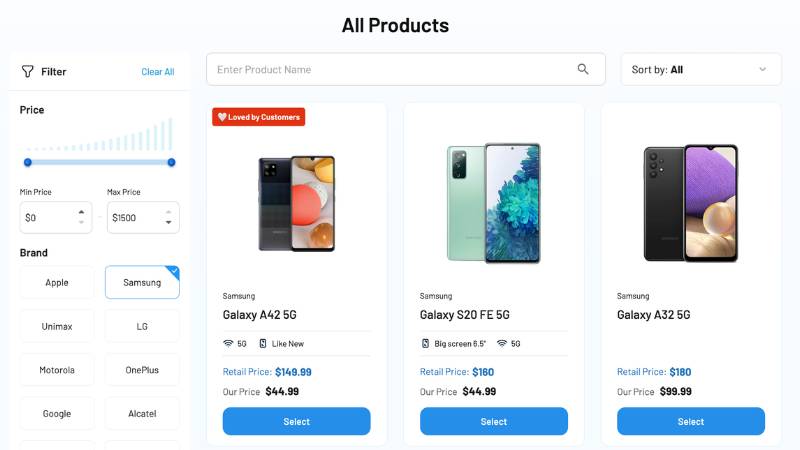
Once you choose a provider, you can select your plan and browse available devices.
At this stage, you will:
- Choose a plan that includes free service
- Compare available smartphones
- Select a free device or a discounted upgrade option
Device availability may include:
- 5G Android phones
- iPhones depending on inventory
- Entry-level smartphones if stock is limited
Checking device options carefully helps you get the best value.
Submit Your Application
Complete your application by entering your information and uploading required documents.
Typical documents include:
- Proof of program participation or income
- Government-issued ID
- Proof of address
Make sure all information is accurate and documents are clear and valid
Once submitted:
- Your application is reviewed
- Your device is confirmed or assigned
- Your service is activated
Most users receive their phone within a few business days after approval.
Read more: Free iPhone 16? What You Need to Qualify Before You Apply
4. Why Many People Choose AirTalk Wireless
When comparing free government cellular phones providers, many users choose AirTalk Wireless because it offers a more flexible and user-friendly experience.
Key reasons include:
- Better device selection: AirTalk often provides a wider range of smartphones, including both Android devices and iPhones.
- Device choice during application: Instead of being assigned a phone, you can browse and select from available options.
- Free service bundled with the device: Plans typically include talk, unlimited text, and data at no monthly cost for eligible users.
- Upgrade options available: Users can choose higher-end devices at discounted prices if they want more features.
- Simple online process: The entire application can be completed from home, making it faster and more convenient.
These advantages make AirTalk Wireless a strong option for users looking to get the most value from a free government cellular phones program.
5. FAQs
Are free government cellular phones really free every month?
Yes, if you qualify, the plan usually includes free talk, unlimited text, and a set amount of data at no monthly cost. However, higher-end devices or extra data may require an upgrade fee.
Can I choose my phone or is it assigned?
Some providers let you choose from available devices during the application, while others assign a phone after approval. Availability depends on inventory at that time.
Do I need a credit check to apply?
No, free government cellular phones programs do not require credit checks. Approval is based only on eligibility.
How long does it take to receive the phone?
Most applications are processed quickly, and devices are usually shipped within a few business days after approval.
6. Conclusion
Not every “free phone” offer delivers the same value, and that is where most people get it wrong.
The real advantage of free government cellular phones is not just avoiding monthly costs, but getting consistent access to service and a usable device when you need it most.
If you approach it the right way by checking eligibility carefully, choosing a provider with better device options, and applying at the right time, you can get a phone that actually supports your daily needs instead of settling for the minimum.