
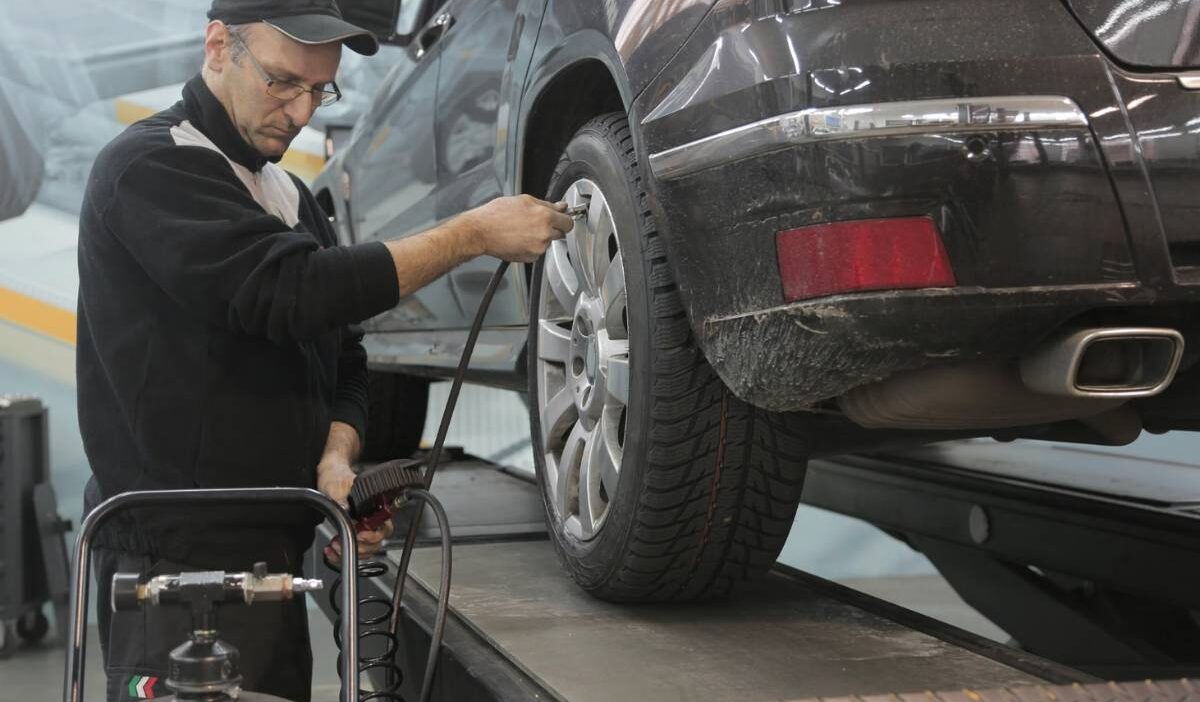
Proper tire pressure plays a bigger role in driving safety than many people realize. Tires that are underinflated or overinflated can reduce fuel efficiency, affect handling, increase tire wear, and even raise the risk of a blowout.
If you’re wondering how to check tire pressure, the good news is that it only takes a few minutes and requires minimal equipment. This guide walks you through each step, explains where to find the correct PSI for your vehicle, and shares practical tips to help you keep your tires in top condition.
1. What You Need to Check Tire Pressure
Before you check your tire pressure, gather these basic tools and keep a few important points in mind:
You’ll need:
- A tire pressure gauge (digital, dial, or pencil gauge)
- An air compressor or air pump (if you need to add air)
- Your vehicle’s recommended tire pressure (PSI)
If you are trying to learn how to check tire pressure without gauge equipment, keep in mind that visual inspection or TPMS warnings can identify possible problems, but they cannot reliably measure exact PSI.
Before you begin:
- Check the tires when they’re cold for the most accurate reading.
- Park on a flat, level surface and turn off the engine.
- Don’t rely solely on the Tire Pressure Monitoring System (TPMS), as it may not show the exact PSI.
2. How to Check Tire Pressure
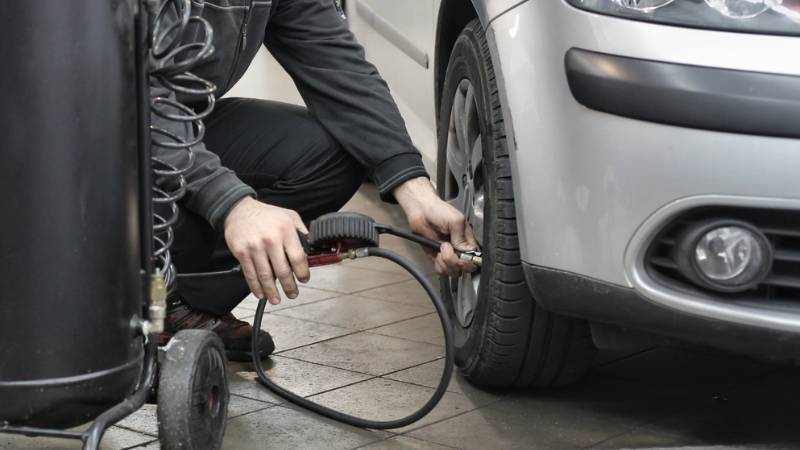
Checking your tire pressure only takes a few minutes. Follow these steps for an accurate reading:
- Park the vehicle and let the tires cool.
- Find the recommended tire pressure.
- Remove the valve-stem cap.
- Press the tire gauge onto the valve.
- Read and record the PSI.
- Add or release air as needed.
- Check all four tires and the spare.
- Replace each valve cap.
Find the Recommended Tire Pressure
Start how to check tire pressure by finding your vehicle’s recommended tire pressure. This value is measured in PSI (pounds per square inch) and is determined by the vehicle manufacturer, not the tire manufacturer.
You’ll usually find the recommended PSI on the driver’s side door jamb sticker or in your owner’s manual. Write down the recommended pressure for both the front and rear tires if they differ.
Check Tire Pressure When Tires Are Cold
For the most accurate reading, check your tires before driving or at least three hours after the vehicle has been parked.
Driving causes the air inside the tires to expand, temporarily increasing the PSI. Measuring hot tires can give a higher reading than the actual cold tire pressure and may lead to incorrect adjustments.
Use a Tire Pressure Gauge Correctly
Remove the valve cap from the tire, then press the tire pressure gauge firmly onto the valve stem. You may hear a brief hiss of escaping air, but that’s normal as long as the gauge is seated quickly and securely.
Read the PSI displayed on the gauge and compare it with the manufacturer’s recommended pressure. Record the reading if you’re checking multiple tires before making any adjustments.
Add or Release Air if Needed
If the pressure is below the recommended PSI, use an air compressor or portable air pump to add air in small increments. Recheck the pressure after every few seconds of inflation until you reach the correct PSI.
If the pressure is above the recommended level, gently press the small metal pin inside the valve stem to release air. Check the pressure again after each adjustment to avoid letting out too much air.
Recheck and Replace the Valve Cap
After adjusting the pressure, use the tire gauge one more time to confirm that the tire matches the recommended PSI. This final check is an important part of how to check tire pressure accurately.
Finally, screw the valve cap back onto the valve stem to help keep out dirt, moisture, and debris. Repeat the process for the remaining tires, including the spare if your vehicle has one.
3. Where Can You Find the Correct Tire Pressure?
The correct tire pressure is set by the vehicle manufacturer and listed in PSI (pounds per square inch). Do not use the maximum PSI printed on the tire sidewall, as that shows the tire’s pressure limit, not the recommended operating pressure.
You can usually find the correct PSI:
- On the sticker inside the driver’s side door jamb
- In the owner’s manual
- Inside the fuel filler door on some vehicles
- On the manufacturer’s official website
Some vehicles recommend different PSI levels for the front and rear tires, so always check the specific values for your vehicle. If you are wondering how to check tire pressure on Honda Civic models, start with the driver’s side door-jamb label to find the recommended PSI before measuring each tire.
4. How Often Should You Check Tire Pressure?
Checking your tire pressure regularly helps improve safety, extend tire life, and maintain better fuel efficiency.
While your vehicle’s Tire Pressure Monitoring System (TPMS) can alert you to significant pressure loss, it shouldn’t replace routine manual checks.
- At Least Once a Month
Check your tire pressure at least once a month, even if your vehicle appears to be driving normally. Tires naturally lose about 1 to 2 PSI per month, so regular checks help you catch gradual pressure loss before it becomes a safety concern.
- Before Long Road Trips
Always check your tire pressure before taking a long trip. Properly inflated tires improve vehicle handling, reduce uneven tire wear, and lower the risk of overheating during extended highway driving.
- During Seasonal Temperature Changes
Cold weather causes tire pressure to drop, while hot weather can increase it. As a general rule, tire pressure changes by about 1 PSI for every 10°F (5.6°C) change in temperature. Check your tires whenever the seasons change or after a significant temperature shift.
5. Common Tire Pressure Mistakes to Avoid
Even if you know how to check your tire pressure, a few mistakes can lead to inaccurate readings or uneven tire wear.
- Checking Pressure After Driving
Driving heats the tires and temporarily raises PSI. For the most accurate reading, check tire pressure before driving or after the car has been parked for at least three hours.
- Ignoring the TPMS Warning Light
A TPMS light can indicate low tire pressure, but it should not replace manual checks. Use a tire pressure gauge to confirm the PSI and adjust it as needed.
- Measuring Only One Tire
Tires can lose air at different rates. Check all four tires individually rather than assuming they have the same pressure.
- Forgetting the Spare Tire
Spare tires also lose air over time. Check the spare during routine tire inspections so it is ready when needed.
6. What Should You Do if Your Tire Pressure Is Too Low or Too High?
If tire pressure is too low or too high, you can usually correct it yourself in a few minutes. Make adjustments gradually and recheck the PSI as you go.
- How to Inflate Tires Safely
To learn how to check tire pressure at gas station air pumps, first measure the tire with the built-in or separate gauge, then add air in short bursts and recheck the PSI.
Do not use the maximum PSI printed on the tire sidewall as your target unless your vehicle manufacturer specifies it.
- How to Release Excess Air
If the tire is overinflated, press the pin inside the valve stem briefly to release air. Recheck the pressure and repeat until the tire reaches the recommended PSI.
- When Pressure Problems May Indicate a Leak
If the same tire keeps losing air, it may have a puncture, damaged valve stem, or other leak. Have the tire inspected instead of repeatedly adding air.
>>> Read more: How Many Liters in a Half Gallon? Quick Conversion and Easy Reference
7. FAQs
What is the correct way to check tire pressure?
The correct way to check tire pressure is to measure it when the tires are cold using a reliable tire pressure gauge. Compare the reading with your vehicle manufacturer’s recommended PSI, then add or release air as needed before replacing the valve cap.
Can you check tire pressure on the dashboard?
Some vehicles display individual tire pressure readings on the dashboard through the Tire Pressure Monitoring System (TPMS). However, many TPMS systems only show a warning light instead of the exact PSI, so using a tire pressure gauge is still the most accurate method.
Is 40 PSI too high for tyres?
It depends on your vehicle. For many passenger cars, 40 PSI may be higher than the recommended cold tire pressure, but it isn’t always unsafe. Always follow the PSI listed on the driver’s side door jamb or in the owner’s manual rather than the maximum pressure printed on the tire sidewall.
8. Conclusion
Checking your tire pressure regularly is one of the simplest ways to improve driving safety and extend the life of your tires. Once you know how to check tire pressure, the process takes only a few minutes and can help prevent uneven tire wear, poor fuel economy, and unexpected tire problems.
Make it part of your monthly vehicle maintenance routine, and always use the tire pressure recommended by your vehicle manufacturer for the best performance.